
"Unraveling the Mystery of Quaoar's Surprising Ring System: A Breakthrough Discovery in Astronomy" 
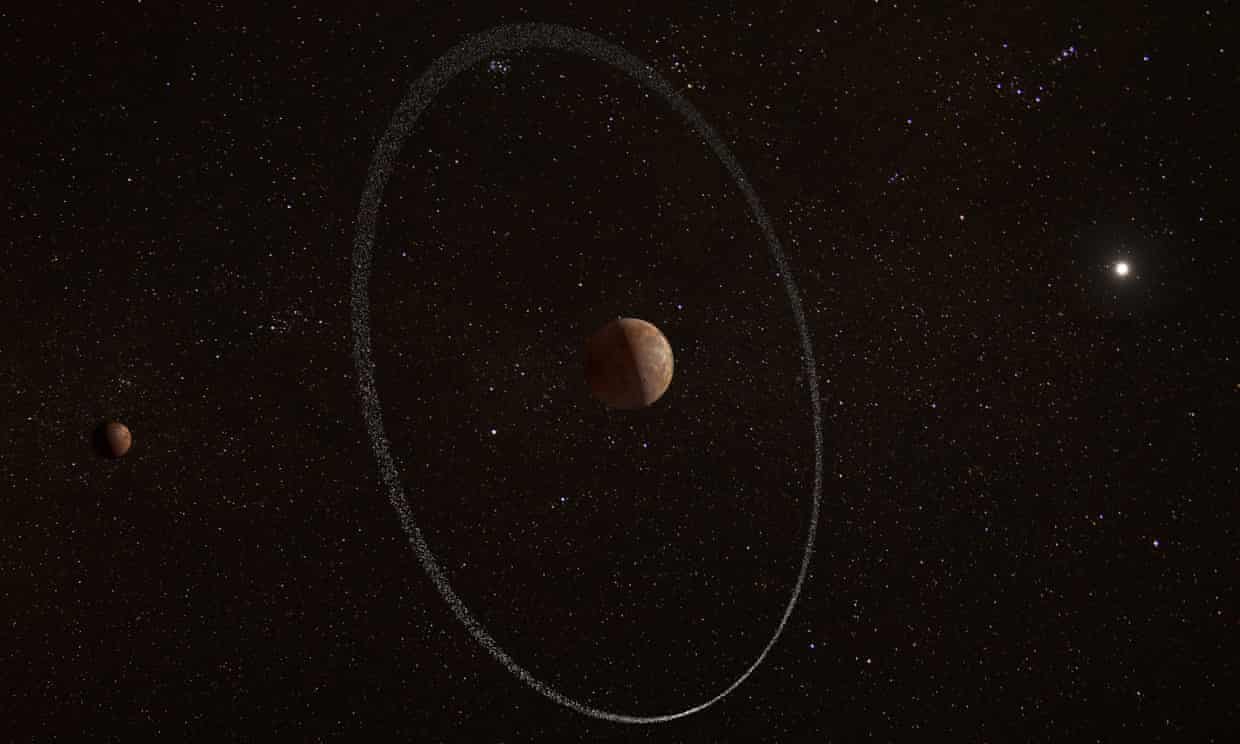


Astronomers have discovered a ring around a dwarf planet, called Quaoar, that is located in the outer reaches of the solar system. The ring, which is situated much further away from the planet than is typical, has raised questions about the formation of such systems. The dwarf planet, which is half the size of Pluto and orbits beyond Neptune, is too distant to be seen directly. However, the detection of the ring was made during an occultation event when a planet passes in front of a star, allowing its sharp silhouette to be briefly observed.

The observations, made by the HiPERCAM telescope on La Palma, showed a sharp dip in starlight as Quaoar passed in front of the star. The two smaller dips that were also observed indicated the presence of a ring system. The ring is located at a distance of more than seven planetary radii, twice as far out as the maximum radius that was previously thought to be the Roche limit.

The latest observations have confounded current theories on the formation of ring systems, and the team is exploring various possibilities for how the distant ring could remain stable. One idea is that the debris in the ring has a frosty ice coating that makes it more elastic during collisions.

This new discovery has the potential to provide further insight into the formation of ring systems and will be of interest to anyone who has learned about Saturn's magnificent rings as a child.

Comments

Popular posts from this blog

"The Consequences of Ignoring Carbon Emissions: A Call for Action"

Carbon emissions are a significant contributor to climate change, which poses a threat to the environment and the well-being of people around the world. However, many people and industries continue to emit carbon without taking action to reduce their impact. In this blog post, we will explore what would happen if we did not curve the line for carbon emissions and practical solutions for common people and industries to combat climate change and promote sustainable living. Consequences of Ignoring Carbon Emissions: If we do not curve the line for carbon emissions, the consequences can be catastrophic. The rise in global temperatures can lead to more frequent and intense natural disasters, including droughts, floods, and hurricanes. This can cause significant damage to infrastructure, agriculture, and the economy. The rise in sea levels can also lead to the displacement of millions of people in low-lying coastal areas. Moreover, the increased concentration of greenhouse gases in the atmo...

Biofuels: The Future of Sustainable Energy for Developing Nations

Biofuels are a type of renewable energy that is derived from organic matter, such as plants, animals, or waste products. They are considered a sustainable alternative to fossil fuels, as they produce significantly fewer greenhouse gas emissions and are more environmentally friendly. There are several different types of biofuels , including: Ethanol : Ethanol is an alcohol-based fuel primarily made from corn, sugarcane, or other crops. Biodiesel: Biodiesel is a type of fuel that is made from vegetable oils, animal fats, or recycled cooking oil. Biogas : Biogas is a type of fuel produced from the decomposition of organic matter, such as sewage, animal waste, or plant matter. Benefits of Biofuels Reducing Carbon Emissions : Biofuels produce significantly fewer greenhouse gas emissions than fossil fuels, which makes them a more environmentally friendly option. Cost-Effective : Biofuels are often cheaper than traditional fuels like petrol and diesel, making them a more affordable option ...